

Food & Hosting
Christmas Dinner Ideas
Christmas dinner has a way of growing before anyone has cooked a thing. A memorable one does not need the most dishes. It needs a menu that works.
AllForXmas EditorialPublished
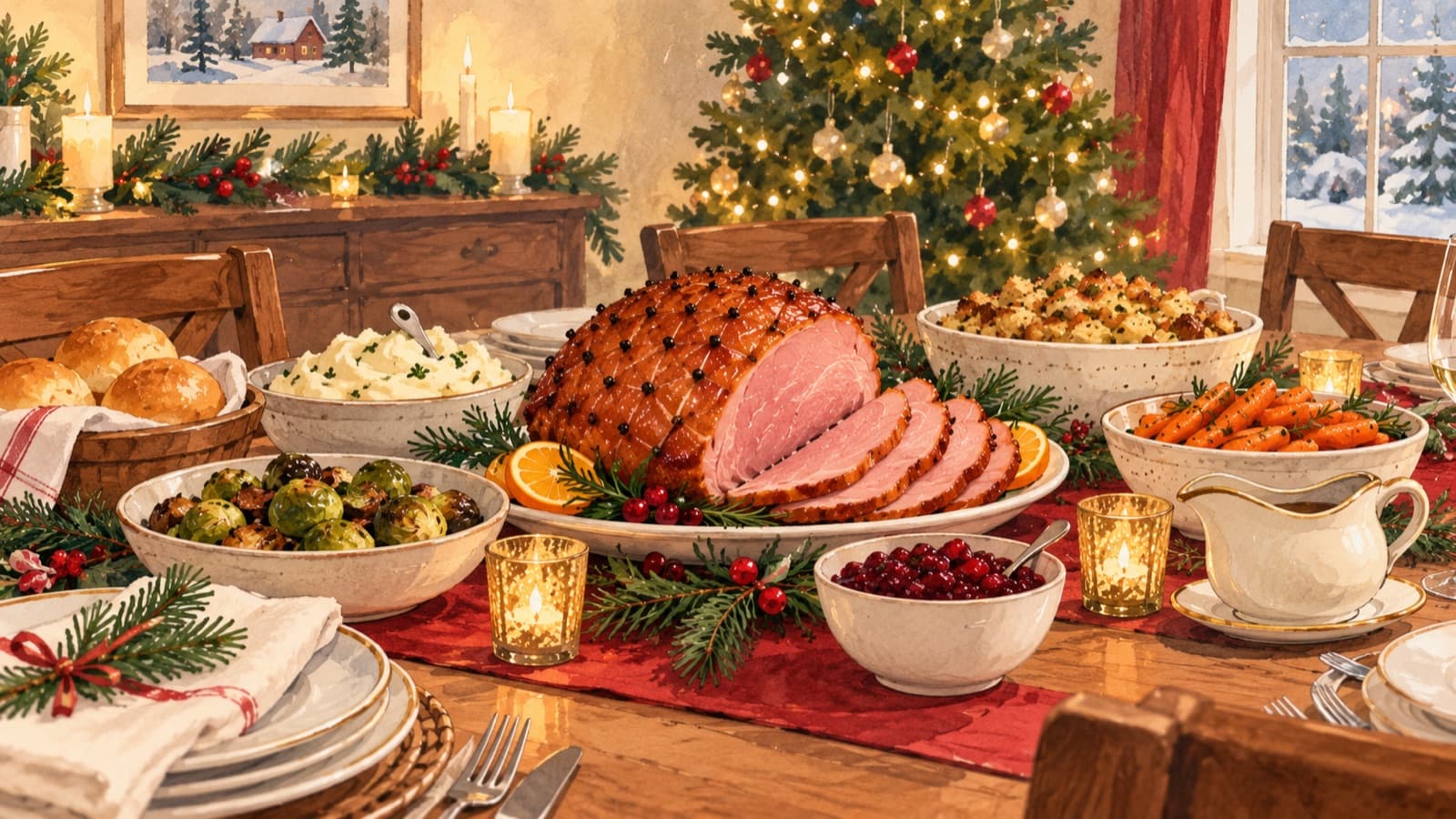
Christmas dinner has a way of growing before anyone has cooked a thing.
One main becomes two. Three sides become six. Someone suggests an appetizer. Someone else remembers the rolls. Then there are two desserts, a dish for one dietary restriction, another family favorite that apparently cannot be omitted—and suddenly almost everything needs the oven at the same time.
A memorable Christmas dinner does not need the most dishes. It needs a menu that works.
Start with the kind of Christmas you are actually having: a traditional family gathering, a dinner for four, a house full of guests, or a celebration where you would rather spend the afternoon with everyone else than in the kitchen. Then choose a centerpiece and build around it.
Here are six complete Christmas dinner ideas designed to work as meals—not just collections of good dishes.
Choose a Christmas Dinner That Fits Your Celebration
| Christmas dinner | Best for | Effort | Make-ahead potential |
|---|---|---|---|
| Classic Christmas dinner | A traditional family Christmas | Moderate | Good |
| Special-occasion Christmas dinner | A smaller, more celebratory meal | Moderate–high | Good |
| Easy, low-stress Christmas dinner | More time with guests, less time cooking | Low–moderate | Excellent |
| Christmas dinner for a crowd | Large family gatherings and buffet-style meals | Moderate | Excellent |
| Christmas dinner for a small group | Couples and smaller families | Moderate | Good |
| Vegetarian Christmas dinner | A meat-free celebration or mixed group | Moderate | Good |
You do not have to follow any of these menus exactly. Think of them as starting points: complete meals you can use as written or adapt around the dishes your family actually wants.
Classic Christmas Dinner
If Christmas dinner in your house is supposed to feel like Christmas dinner, there is nothing wrong with leaning into tradition.
The menu
- Centerpiece: roast turkey or glazed ham
- Potatoes: creamy mashed potatoes
- Sides: stuffing or dressing, green beans and roasted carrots
- On the table: gravy, cranberry sauce and dinner rolls
- Dessert: apple pie or pecan pie
Turkey gives the meal the feel of a traditional holiday roast, while glazed ham is an equally festive alternative that can be easier to manage. Both work with the familiar combination of potatoes, stuffing, vegetables and holiday condiments.
The important thing is not to keep adding sides simply because another Christmas recipe sounds good. Mashed potatoes and stuffing already make this a substantial meal. Green beans bring something fresher to the plate, while roasted carrots add color and a little sweetness.
If your family has a non-negotiable Christmas dish—sweet potatoes, macaroni and cheese, a particular casserole—add it. Then consider replacing something else rather than automatically making the menu bigger.
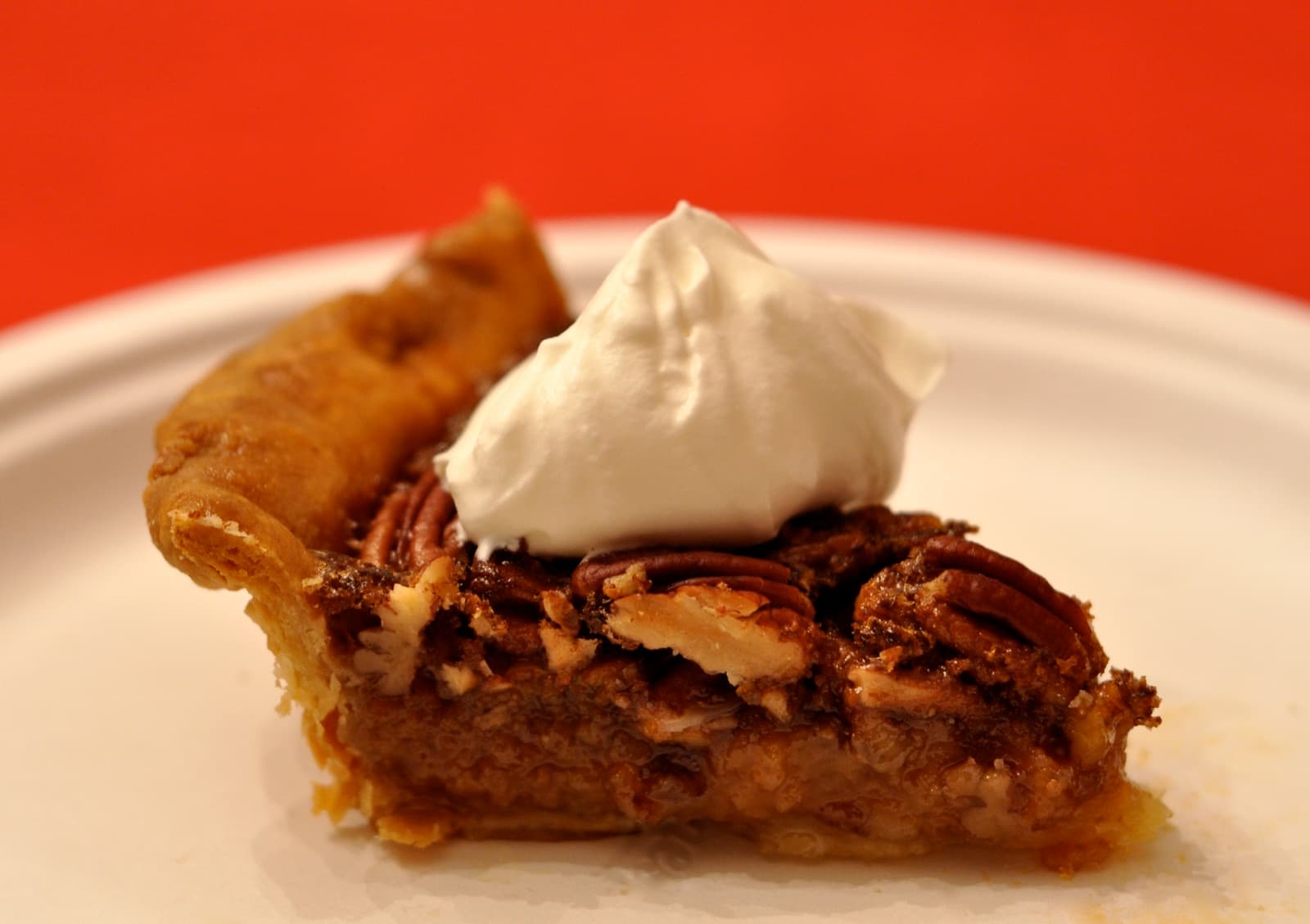
Easy swaps: Choose ham instead of turkey, Brussels sprouts instead of green beans, roast potatoes instead of mashed potatoes, or your family's traditional Christmas dessert instead of pie.
Special-Occasion Christmas Dinner
For a Christmas dinner that feels a little more luxurious, make the centerpiece the event.
The menu
- Centerpiece: prime rib or another beef rib roast
- Potatoes: potato gratin
- Vegetable: roasted carrots
- Something fresh: winter salad with a sharp vinaigrette
- Sauce: horseradish sauce
- Dessert: a rich chocolate dessert
Prime rib and potato gratin make this a rich meal, which is exactly why the rest of the menu should show some restraint. Roasted carrots provide sweetness without another creamy casserole, while a crisp salad and acidic dressing cut through the heavier dishes.
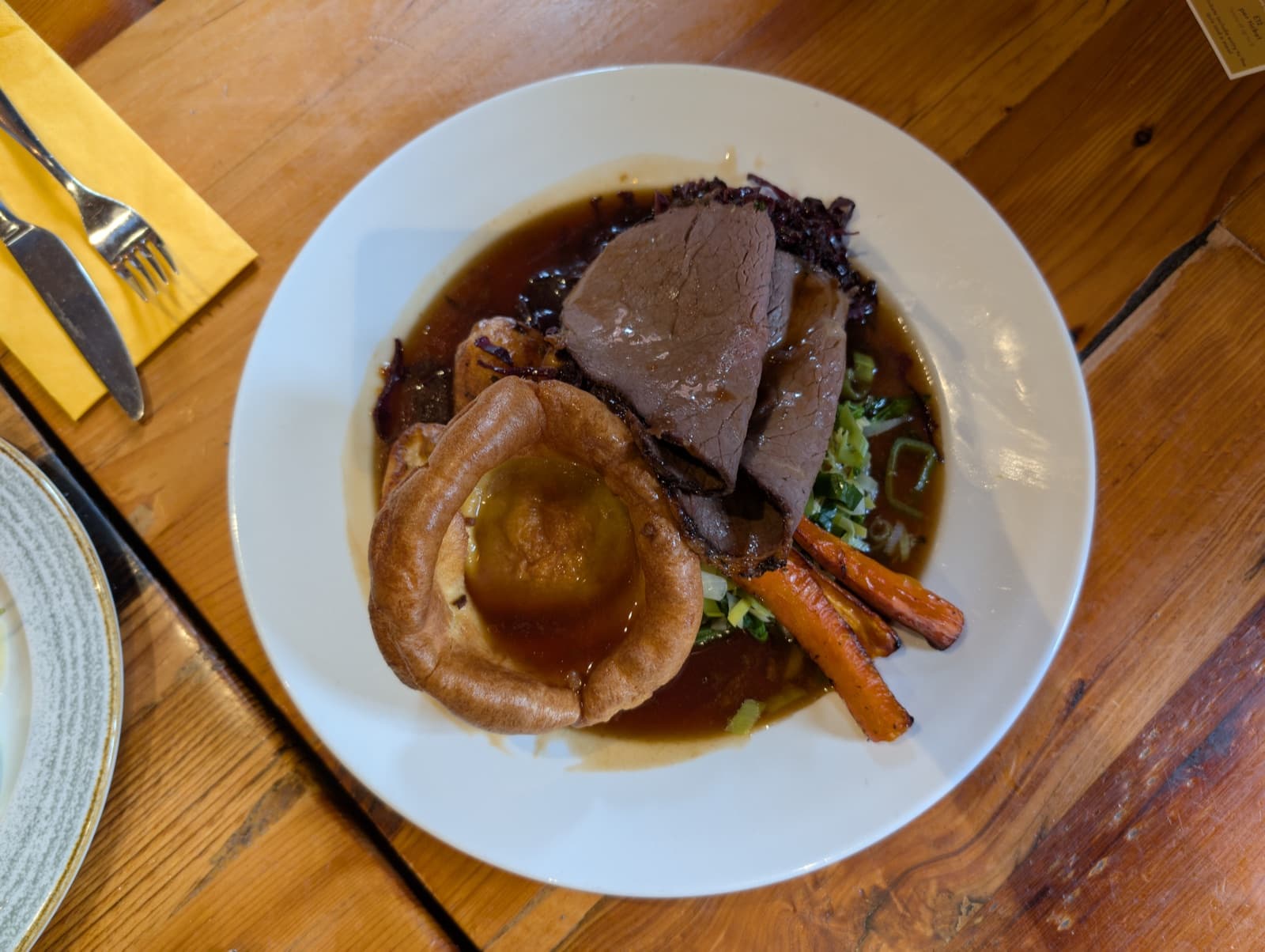
This menu also illustrates one of the most useful rules of Christmas cooking: use the resting time of the main dish.
A roast does not necessarily have to travel directly from oven to carving board. A planned resting period can give you valuable time to finish or reheat another dish. The final stretch of Christmas dinner is far easier to manage when it is organized around resting, reheating and changing oven temperatures rather than trying to finish everything simultaneously.
That does not make this an effortless dinner, but it makes it far more manageable than a menu with five elaborate dishes all competing for attention at the same moment.
Easy swaps: Replace the gratin with mashed potatoes if you want fewer oven demands, use roasted green beans instead of carrots, or serve a make-ahead chocolate tart rather than a last-minute dessert.
Easy, Low-Stress Christmas Dinner
A relaxed Christmas dinner starts with a simple question: what can be finished before everyone is hungry?
The menu
- Centerpiece: glazed ham
- Potatoes: make-ahead potato casserole
- Vegetable: roasted Brussels sprouts
- Something fresh: simple green or winter salad
- Bread: dinner rolls
- Dessert: make-ahead cheesecake or a good bakery dessert
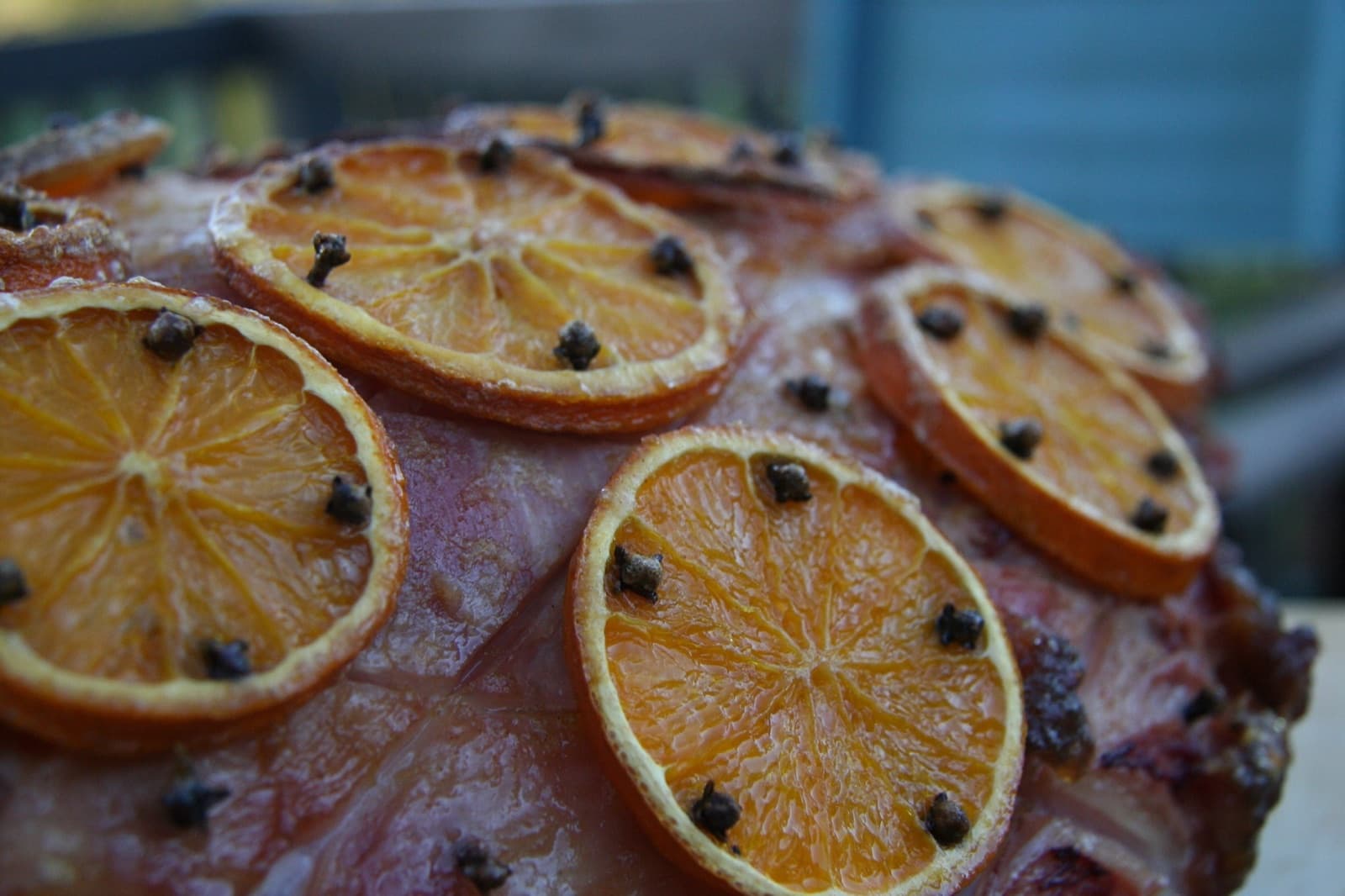
Ham is particularly useful here because it gives you a substantial holiday centerpiece without making every other part of dinner dependent on a narrow cooking window.
The potato dish can be assembled ahead. The salad can largely be prepared before dinner and dressed at the end. Dessert can be completely finished before Christmas Day—or purchased.
And yes, buying dessert counts as planning.
If your priority is an easy Christmas dinner, there is little sense in saving yourself an hour on the main meal and then committing to an elaborate dessert that keeps you in the kitchen.
Make-ahead holiday menus commonly shift sauces, desserts, casseroles and vegetable preparation into the preceding day or days.See source 1 The lesson is not that you need a complicated preparation schedule. It is simply that Christmas Day should not be the first time you touch every ingredient.
Easy swaps: Use green beans instead of Brussels sprouts, mashed potatoes if your family prefers them, or serve pie from a favorite local bakery.
Christmas Dinner for a Crowd
Cooking for fourteen people is not the same problem as cooking for six with larger quantities.
For a big gathering, choose dishes that scale well, can wait a few minutes without suffering and are easy to serve family-style or from a buffet.
The menu
- Centerpiece: glazed ham
- Optional second centerpiece: turkey breast
- Potatoes: mashed-potato casserole
- Sides: stuffing or dressing, green beans and glazed carrots
- Something fresh: a large winter salad
- Bread: dinner rolls
- Dessert: pies, trifle or a large-format cake
The second centerpiece is optional. For a particularly large group, though, adding another meat can make more sense than adding three more side dishes.
A ham and turkey breast also give guests a choice without requiring you to manage two whole birds or two complicated roasts.
For the rest of the menu, think in large-format dishes. Casseroles, pans of vegetables, bowls of salad and baskets of rolls are easier to portion and replenish than individually assembled food.
When you're cooking for a crowd, add capacity before you add complexity.
This is also where advance preparation matters most. The more people you are feeding, the less appealing it becomes to have four dishes requiring active attention during the final fifteen minutes.
If you are serving dinner buffet-style, remember that food safety becomes part of the logistics too: hot foods need to stay hot and cold foods cold, and perishable food should not sit indefinitely at room temperature. Follow current USDA guidance when planning how food will be held and served.See source 2
Easy swaps: Skip the second meat for a smaller crowd, substitute a vegetable casserole your family loves, or ask guests to bring dessert while you concentrate on dinner.
Christmas Dinner for a Small Group
A smaller Christmas dinner should not feel like a large Christmas dinner divided by four.
It can be simpler and still feel special.
The menu
- Centerpiece: roast chicken or a small beef roast
- Potatoes: crispy roasted potatoes
- Vegetable: green beans or Brussels sprouts
- Something fresh: winter salad
- Sauce: one sauce or gravy that complements the main
- Dessert: small tart, cake or individual desserts
With fewer guests, you can concentrate on a centerpiece and two or three things that everyone genuinely wants.
A whole turkey may make sense if leftovers are part of your Christmas tradition. If they are not, there is no rule requiring one. Roast chicken can still create the ritual of bringing a beautiful roast to the table, while a smaller beef roast can make dinner feel particularly celebratory.
The same principle applies to dessert. You do not need three pies for four people unless three pies are the point.
This is one of the easiest menus to personalize. If everyone loves potatoes and nobody particularly cares about bread, skip the rolls. If your favorite family side is macaroni and cheese, serve it and lose another starch.
The goal is not to reproduce a twelve-person Christmas table in miniature. It is to make a Christmas dinner that feels complete at the size you actually need.
Vegetarian Christmas Dinner
A vegetarian Christmas dinner deserves a centerpiece.
Removing the turkey from a traditional menu and leaving a vegetarian guest with potatoes, carrots and salad may technically provide food, but it does not create much of a Christmas dinner.
The menu
- Centerpiece: mushroom Wellington
- Potatoes: potato gratin or creamy mashed potatoes
- Vegetables: roasted root vegetables and green beans or Brussels sprouts
- Something fresh: winter salad
- Sauce: vegetarian gravy or another complementary sauce
- Dessert: chocolate tart or a fruit-based dessert
Mushroom Wellington works particularly well because it occupies the same role as a holiday roast: it is substantial, sliceable and worthy of being brought to the table as the centerpiece.
If making pastry feels like more work than you want, choose a substantial mushroom-and-lentil loaf or another vegetable-based centerpiece instead. The exact dish matters less than giving the meal a focal point.
This menu can also work well for a mixed gathering. You do not necessarily need to make the entire Christmas dinner vegetarian simply because one or two guests do not eat meat. What matters is making sure those guests can assemble a satisfying, intentional meal.
That principle applies to other dietary needs too: not everyone has to be able to eat every dish, but everyone should be able to eat dinner.
Build Your Own Christmas Dinner
None of those menus quite right?
Build yours from the centerpiece outward.
1. Choose a centerpiece
Start here because the main dish usually determines the character of the meal—and often claims the biggest share of your oven and attention.
Good Christmas options include:
- Roast turkey
- Glazed ham
- Prime rib or another beef roast
- Roast chicken
- Mushroom Wellington or another substantial vegetarian centerpiece
You do not automatically need two mains. Add a second centerpiece when the number of guests, dietary needs or family preferences justify it.
2. Choose a potato or starch
For most menus, one substantial starch is enough:
- Mashed potatoes
- Roasted potatoes
- Potato gratin
- Potato casserole
- Stuffing or dressing
If stuffing is an important part of your traditional dinner, you may want potatoes as well. That is a choice, not a requirement.
3. Add two or three vegetables and sides
Look for contrast rather than sheer quantity.
If the rest of the meal is rich and creamy, choose at least one vegetable that is simpler or fresher.
Options include:
- Green beans
- Brussels sprouts
- Roasted carrots
- Roasted root vegetables
- Squash
- Winter salad
A useful combination is often one warm green or roasted vegetable + one brighter or fresher dish.
4. Add the things that make the meal feel complete
Depending on the centerpiece, that might mean:
- Gravy
- Cranberry sauce
- Horseradish sauce
- Vegetarian gravy
- Dinner rolls or bread
These are supporting players. You do not need all of them.
5. Choose dessert
Christmas dessert can be as ambitious—or as easy—as you want:
- Apple or pecan pie
- Cheesecake
- Chocolate tart or cake
- Fruit tart
- Trifle
- A favorite family dessert
- Something excellent from a bakery
If dinner already requires significant last-minute cooking, a make-ahead or purchased dessert is often the smarter choice.
How to Choose the Right Christmas Main
If you are torn between turkey, ham, beef and something else, consider four things before tradition makes the decision for you.
How many people are coming? A large ham or turkey can make sense for a crowd. A smaller roast or chicken may be much more practical for four.
How much active cooking do you want on Christmas Day? Some centerpieces demand more attention than others. If your ideal Christmas afternoon does not involve repeatedly checking the oven, build the menu accordingly.
What else needs the oven? A centerpiece that occupies your only oven for hours affects every side dish you choose.
What does your family actually want? Tradition is valuable when people enjoy it. If nobody particularly likes turkey, Christmas is a strange day to cook an enormous one solely because it feels obligatory.
How Many Sides Do You Need?
Probably fewer than you think.
For many Christmas dinners, a good starting point is:
one potato or starch + two vegetables/sides + the appropriate sauce or condiment.
A traditional menu may justify another side such as stuffing. A large gathering may benefit from additional choice. But there is no universal number that turns dinner into Christmas dinner.
Every extra dish has a cost: ingredients, refrigerator space, preparation time, another serving bowl and, often, another demand on the oven.
Before adding something, ask whether it improves the meal or simply makes the menu longer.
What Should You Make Ahead?
The best make-ahead dishes are not necessarily the ones that can be completely cooked three days early. They are the ones that remove work from the period immediately before dinner.
Depending on the recipe, that might mean:
- assembling a casserole in advance;
- making dessert the day before;
- preparing sauces and dressings;
- washing and trimming vegetables;
- chopping ingredients;
- setting the table and organizing serving dishes;
- making a cold component that only needs finishing before dinner.
Established holiday cooking plans routinely spread preparation across several days precisely because a complex meal becomes much easier when Christmas Day is reserved for the tasks that genuinely need to happen then.See source 1
You do not need a professional kitchen schedule. Just look at every dish and ask:
What part of this can I stop worrying about before Christmas Day?
If you are also cooking the night before, keep that meal simple. Our Christmas Eve dinner ideas are planned to leave the oven, the fridge and your energy for Christmas Day.
Plan Around Your Oven, Not Just Your Recipes
This may be the most overlooked part of choosing a Christmas menu.
Imagine you have selected:
- a roast that needs the oven;
- potato gratin at a different temperature;
- roasted Brussels sprouts;
- baked stuffing;
- dinner rolls;
- and a dessert that needs to be served warm.
On paper, you have six excellent dishes.
In one oven, you may have a traffic jam.
The way out is to sequence dishes around oven temperatures, the resting period of a roast and reheating windows. You can apply that principle without creating a minute-by-minute production plan.
For a one-oven kitchen, try to build a menu with:
- one long-cooking oven centerpiece;
- one or two dishes that can be reheated or finished while the main rests;
- at least one stovetop or cold component;
- at least one side requiring almost no last-minute attention.
Also check temperatures. A dish that needs 425°F for forty minutes may not fit neatly beside something slowly cooking at 325°F.
The best Christmas menu is not simply the collection of dishes you like most. It is the collection you can actually get onto the table together.
Making Christmas Dinner Work for Different Diets
If someone at the table is vegetarian, gluten-free, dairy-free or has another dietary requirement, begin by thinking about their whole plate rather than individual substitutions.
Can they eat the centerpiece?
If not, is there another substantial option?
Do they have a starch, vegetables and sauce they can eat?
Will they have dessert?
You do not necessarily have to make every dish work for every person. With a complicated combination of dietary needs, it is usually more practical to provide particular dishes for particular needs.
What matters is that nobody reaches the table and discovers that their Christmas dinner consists of one side dish and whatever they can pick around.
For allergies or medically necessary dietary restrictions, check ingredients and how a dish was prepared rather than assuming it is safe because its name sounds suitable.
A Christmas Dinner You Can Actually Enjoy
There is always another dish you could add to Christmas dinner.
That does not mean you should.
Choose the centerpiece people will look forward to. Give it a few sides that complement it. Make something ahead. Leave yourself enough oven space. Buy the dessert if that makes the day better.
And build the meal for the Christmas you are actually having—not the imaginary Christmas where you have two ovens, unlimited counter space and nothing else to do all day.
The point of planning Christmas dinner is not to create the largest possible feast.
It is to make a meal everyone can sit down and enjoy together.